Our track-record

Since its first investment vehicle, launched in 2006, Oltre has always been investing in companies with explicit and intentional potential to solve relevant social or environmental challenges.

From Oltre I onwards, the investment strategy has been one to focus on projects with an impact intention at the very core center of the business model, and not as a lateral feat. The intentionality is defined as the one to start from key social and human needs, rather than looking at commercial trends.

At the beginning, we have opened some markets, creating a track-record in those sectors with very high social impact traditionally excluded by the VC / PE industry, as social housing or accessibility of the healthcare system. In some cases, we have selected the most promising projects and brought them on the market, vesting them with solid business models capable of guaranteeing adequate financial returns. In this sense, we have always focused on the scalability of the business models either selecting the most scalable ones or working with our entrepreneurs to ensure solid growth: scalability is the key aspects to reach not only business appetite, but also a significant level of impact, namely when targeting a significant number of beneficiaries.

First impact investing fund in Italy, founded in 2006

Selected high-impact sectors, choosing the best entrepreneurial projects

Turned social projects into solid and scalable business models

Opened up market trends as Social Housing or accessible healthcare

Our Impact Goals

We invest in meaningful topics, namely targeting companies that can address social or environmental challenges of our society within a valid and scalable business model. As above mentioned, our target companies have an integrated model, in which Impact is pursued at the very center of the business activities and not as a lateral feat.

We think intentionality is a key aspect: while finance is progressively adding sustainability feats to traditional investments products, we have been having impact objectives at the core center of our financial activity from the very beginning. Pursuing impact with intentionality is profoundly different than the hype that sustainability is gathering recently. Indeed, elected companies have an intention to solve a relevant environmental or social challenge.

Having ensured the target companies we invest are impactful, then we commit to precisely measure the impact that they are able to generate, setting deal by deal Impact KPIs at the investment moment (see 1.5).

Despite we are sector agnostic, focusing on any company that can provide positive intentional scalable impact, we have identified three main goals that we want to target at a Fund level:

  1. Empowered People
  2. Healthier People
  3. Cleaner Planet

A quantitative target at an aggregated level will be dropped on these goals in the coming months.

To better explain the goals at a Fund level, we provide a synthetic and non-exhaustive clarification of the sectors that can fall under them.

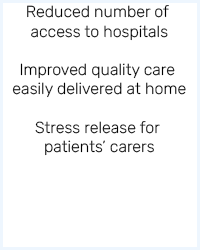
Healthier people: under this goal we comprehend all those sectors that can help people to improve their health and well-being conditions: healthcare, accessibility of the healthcare system, personal care and well-being, home care, social assistance to elderly.

Empowered people: we aim to invest in companies that can help individuals to live in safe, fair, diverse and without risk of exclusion. Under this goal we include sectors as education and employment, local development, social tourism, safety in work places, activity in underserved areas.

Cleaner Planet: all the solutions that can contribute to the ecological transition and to fight climate change are broadly comprehended under this broad goal. Some examples of sectors we have invested in, or aim to invest in the future: green energy, smart cities & green mobility, food & agriculture, waste savings, sustainable construction, clean air and water, sustainable goods and services in general.

In addition to the fact that our investments have intentionality in pursuing a social or environmental goal, we screen the sustainability risks and assess ex-ante our investments according to the PAIs we consider relevant, as will be explained later.


Healthier People

We address the most urgent social challenges related to health of human beings and their well-being in broader sense

Empowered People

A fairer society must make sure to empower people in every aspect: education, local development and inclusivity

Cleaner Planet

It is our goal to support solutions that can provide significant contribution to the urgent climate challenge our earth is facing.

Our approach to Impact

We invest in meaningful business models, addressing real social or environmental challenges of our society

We invest in companies with an integrated model, in which impact is pursued at the very center of the business activities and not as a lateral feat

We measure the impact of our investees, committing to measure positive change they are able to generate

Our Impact Framework

To provide a thorough assessment of our portfolio we have designed a map that can help us in organizing our portfolio across our impact goals identified at a fund level and across the SDGs. Indeed, along the investment process we make sure that each of our investments can fall under the scope of our impact goals and being at the same time aligned with the SDGs.

Empowered People

Portfolio companies
SDGs
Outcomes

Healthier People

Portfolio companies
SDGs
Outcomes

Cleaner Planet

Portfolio companies
SDGs
Outcomes

Impact measurement methodology

An important premise:

As from the Theory of Change, we want to measure outcomes, focusing on a measurement that is oriented to track the change occurred, instead of the the result only.
Outputs are those operative results obtained by the activities of the company, often not capable to capture whether the company is creating impact.

Oltre Positioning:

Our objective is to measure Outcomes and our effort is fully committed to trace the change that our investees are capable to generate towards their beneficiaries (either people or planet).

We firmly think that measuring outcomes must include stakeholders’ point of view:

Outcomes cannot be measured properly without considering if the change has actually been experienced by beneficiaries. Including their point of view is the key aspect to assess whether the company is actually providing the intended positive change.

Having assessed the majority of well-known impact methodologies, we have retrieved some important pillars from the Theory of Change, one of the main methodology adopted for assessing the social impact of an organization and from the Social Return on Investment, traditionally used to assess how much impact is generated out of a 1€ invested in an organization, which we do not apply in its integrity, but that has been helpful in providing us with some useful principles. Alongside, the Impact Management Project is helping us in assessing the importance of the dimensions of impact and its features will be included in our next impact report. This methodology helps impact assessment via five main dimensions of impact which are analyzed internally and with entrepreneurs: what, who, how much, contribution, impact risk.

An important premise: as of the Theory of Change, our commitment is to measure outcomes, focusing on a measurement that can trace the positive change that the company is capable to provide to its beneficiaries, not just focusing on the performance. To be precise, our measurement methodology has full intention to measure outcomes, not just outputs.

Impact measurement methodology

Impact

What is the problem solved? Is there alignment with one of our impact goals?

Stake-holder

Who are the beneficiaries of the impact?

Outcomes

Which changes are being generated on the beneficiaries towards?

KPIs

We find a proxy capable to estimate the level of outcome reached

Reporting on our Impact KPIs

Every year, we report to our investors on the Impact KPIs calculated with our portfolio companies. We include this information in the Annual Investor Report. Alongside each portfolio company’s business performance, we provide detailed information on the Impact KPIs and the impact multiple calculated for that year.
In addition, each year we report the impact multiple calculated at fund level, weighted by the amount invested.

Impact across our investment process

While we have a dedicated impact team, we run an impact analysis across the whole investment process.

The intention is the one to remain light, so to speak, at the very initial phase of process, namely the screening, just questioning whether the company is answering to an impact problem and/or addressing a relevant social or environmental challenge. At the beginning of the analysis, the investment team has to assess thoroughly the impact goal of the company, who are the stakeholders impacted and the expected outcomes (i.e. positive changes) on them.

When evaluating an investment, the investment team therefore assesses not only the validity of the business model, the management team and the economic sustainability in the medium term, but also the social impact that the investment may generate. In the investment committee a discussion about the company takes place, resulting in a no-go decision whether the company is considered not impactful enough (as well as all the other business topics). Where the investment team is intended to progress with the analysis, an impact due diligence takes place internally, intended to: analyze all aspects of the business, provide data on the social / environmental challenge, benchmark with comparable companies also when invested by other impact funds to assess the impact angle that is being undertaken, clearly define outcomes and comprehend whether the solution is actually contributing to the problem in an innovative and additional way.

During the analysis a pre-set of Impact KPIs is identified together with the entrepreneurs. Once Impact KPIs are identified, discussed, tested and analyzed with the entrepreneurs, they have to be approved by the Advisory Board. After that, data collection happens yearly and their reporting takes place in our impact report, dropped yearly.

We think that impact measurement is never enough, hence we have an internal impact management plan, to continuously push our entrepreneurs to deliver more impact, in various ways.

As better clarified in the paragraph 2 “ESG Commitment”, before the final investment decision an ESG due diligence takes place. At this stage, several sustainability risks specifically referred to the target company are taken into account and PAI indicators are assessed, as of the SFDR regulation.

Our Carry Model

The 70% of the carried interest is tied to the achievement of the impact KPIs.

If impact KPIs are not achieved at a fund level, the 30% of the 20% carried interest is not given to the management team.

Browse our Impact Report

Impact and Sustainability Report 2025